English
 Arabic
 Russian
 French
Artificial Intelligence is no longer a future trend in the UAE - it's the present operating system of every ambitious brand's marketing strategy. From the boardrooms of DIFC to the e-commerce warehouses of Dubai South, AI is actively rewriting how businesses attract, convert, and retain customers.
The UAE occupies a uniquely privileged position in this transformation. With a government that launched a National AI Strategy targeting 2031 leadership, a business ecosystem that rewards early adoption, and a consumer base that is among the most digitally sophisticated in the region, the conditions for AI-powered marketing to thrive here are exceptional. But what does that actually look like on the ground?
The UAE's National AI Strategy aims to make the country a global leader in AI by 2031, with a projected contribution of AED 335 billion to the economy. For marketers, this creates an infrastructure and talent environment unlike anywhere else in the Middle East.
How AI is Actively Changing UAE Digital Marketing
1Hyper-Personalisation at Scale
Traditional personalisation in marketing meant segmenting an email list into a few broad groups. AI-powered personalisation means delivering an individually tailored message to each customer based on their browsing behaviour, purchase history, location, time of day, and even device type - in real time. For UAE retailers navigating a consumer base that spans over 200 nationalities, this level of precision is not a luxury. It is the baseline expectation of a sophisticated audience that has seen the best digital experiences in the world.
Platforms like Adobe Experience Cloud, Salesforce Einstein, and emerging GCC-focused MarTech solutions are enabling brands to deploy AI-driven personalisation across email, web, and social channels simultaneously - reducing cost-per-acquisition while dramatically improving conversion rates.
2Arabic-Language AI and the NLP Breakthrough
One of the most significant developments for UAE marketers specifically is the rapid advancement of Natural Language Processing in Arabic. For years, Arabic-language digital marketing lagged behind English because the tools simply didn't understand the dialectal nuances of Gulf Arabic, Modern Standard Arabic, and the mixed code-switching that characterises how UAE residents actually communicate online.
That has fundamentally changed. AI models trained on Arabic text at scale can now power chatbots, sentiment analysis tools, content recommendation engines, and even SEO keyword clustering in Arabic with meaningful accuracy. For brands targeting Emirati nationals, Arabic-speaking expatriates, or consumers across the wider GCC, this is a competitive differentiator that remains largely underexploited.
3AI-Powered Content Creation: Accelerator, Not Replacement
The most honest conversation in UAE marketing right now is about the role of AI in content creation. Generative AI tools - large language models, image generators, video synthesis platforms - have compressed the time it takes to produce first-draft content by an extraordinary margin. A blog post that once took a content writer two days can now have a solid first draft in two hours.
But UAE brands that are winning with AI content understand a critical distinction: AI generates, humans elevate. The brands producing genuinely compelling content are using AI as a research and drafting accelerator, then applying expert editorial judgment, brand voice, cultural sensitivity, and strategic insight at every stage of the process. Raw AI output - without that human layer - tends to be generic, culturally flat, and ultimately unconvincing to the discerning UAE consumer.
4Predictive Analytics and Smarter Ad Spend
With competition for digital advertising space in the UAE intensifying across Google, Meta, TikTok, and Snapchat, every dirham of ad spend demands accountability. AI-driven predictive analytics tools are enabling marketing teams to model campaign performance before budgets are committed, identify which audience segments are most likely to convert, and automatically adjust bidding strategies in real time based on performance signals.
The practical outcome is a measurable reduction in wasted spend and a significant improvement in return on ad spend (ROAS). For UAE businesses investing AED 20,000 to AED 200,000 per month in paid media, this is transformative - the difference between campaigns that burn budget and campaigns that build businesses.
5AI Chatbots: The New Customer Service Frontline
The UAE's consumer culture places enormous value on immediacy and quality of service. An unanswered WhatsApp query or a slow live chat response is a lead lost. AI-powered chatbots - deployed across websites, WhatsApp Business, and social media direct messages - are enabling UAE brands to deliver instant, contextually intelligent responses twenty-four hours a day in multiple languages.
The best implementations we see at Digital Arabia go beyond scripted FAQ bots. They integrate with CRM systems to surface customer history, qualify leads through conversational flows, book appointments, and escalate complex cases to human agents seamlessly. In sectors like real estate, healthcare, and e-commerce - where the UAE market is intensely competitive - this capability has become table stakes.
6Voice Search and AI: The Arabic Dimension
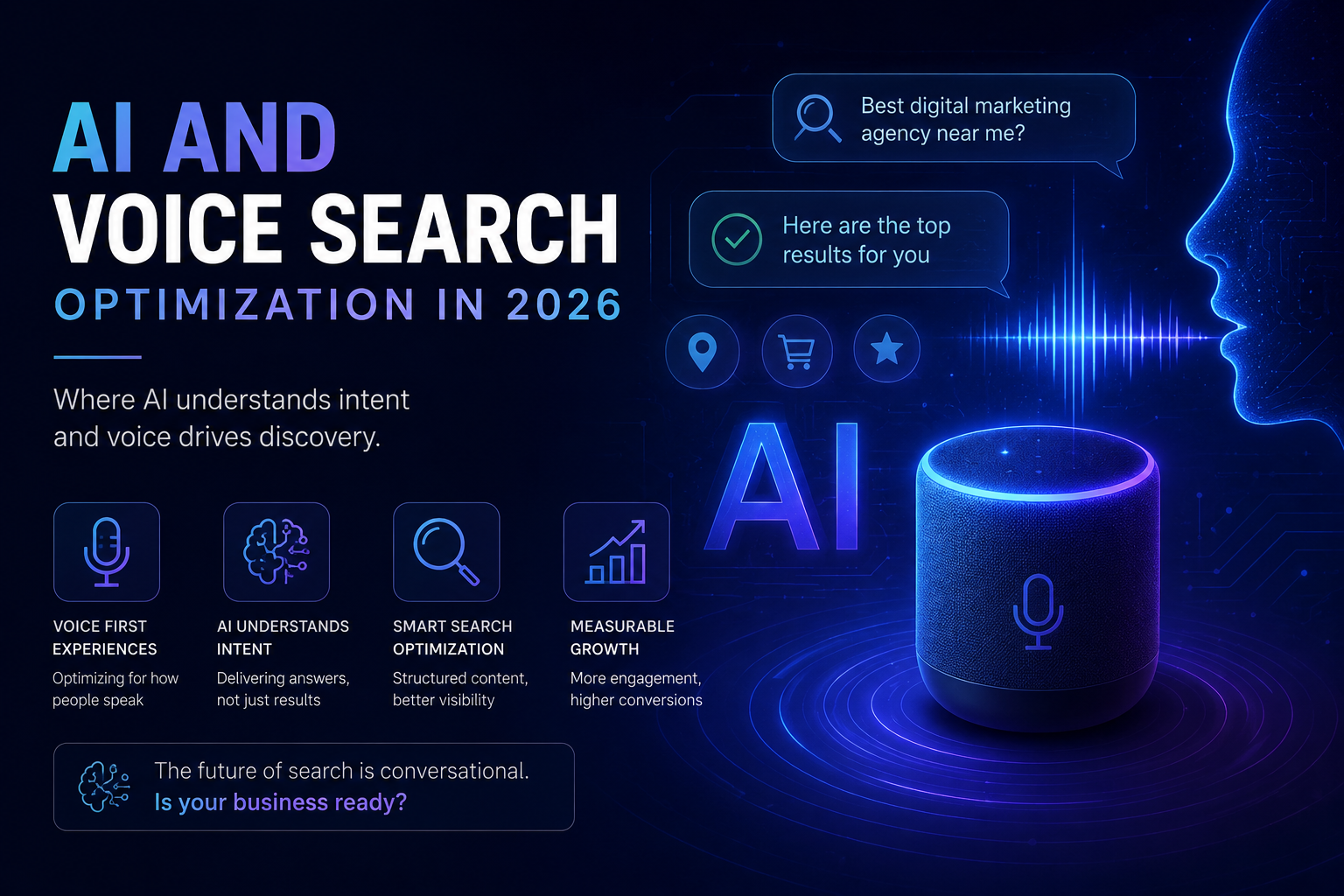
Voice search adoption in the UAE is accelerating faster than almost anywhere else in the world. With Google Assistant, Siri, and Amazon Alexa all available in Arabic, and smartphone penetration among the highest globally, UAE consumers are increasingly searching with their voice - particularly for local queries: "find a restaurant near me in Jumeirah", "best dermatologist in Abu Dhabi", "pharmacy open now".
Optimising for voice search demands a fundamentally different content strategy: conversational phrasing, question-based keyword targeting, and featured snippet optimisation. AI tools that analyse voice search patterns are now essential for any UAE brand with a significant local customer base.
The Challenges UAE Marketers Must Honestly Address
No honest assessment of AI in UAE digital marketing can ignore the challenges. Data privacy regulations - including the UAE Federal Data Protection Law - place clear obligations on how consumer data is collected, stored, and used to train AI systems. Brands that build AI-powered personalisation on shaky data governance foundations are building on sand.
There is also the talent gap to acknowledge. The UAE has an extraordinary concentration of ambitious, educated marketing professionals - but AI literacy across marketing teams remains uneven. Investing in upskilling, whether through formal training, agency partnerships, or hands-on experimentation, is not optional for organisations that intend to remain competitive.
Finally, there is the risk of over-automation: the loss of the distinctly human, culturally attuned brand voice that resonates with the UAE's extraordinarily diverse consumer population. AI without editorial oversight produces content that is grammatically correct but culturally empty. The solution is not less AI - it is smarter deployment of AI alongside genuine human expertise.
What Forward-Thinking UAE Brands Are Doing Right Now
The most successful businesses we work with at Digital Arabia are not waiting for AI to become "more mature." They are piloting, learning, and iterating today. They are automating repetitive tasks - content briefs, reporting, ad copy variations, A/B testing - so their best people can focus on strategy, creativity, and relationship-building.
They are treating AI as a layer that amplifies every part of the marketing funnel: better data going in, smarter decisions being made, more relevant experiences going out. And they are building teams where AI proficiency is a hiring criterion, not an afterthought.
The gap between brands that embrace AI in their digital marketing and those that don't is widening every quarter. In the UAE's hyper-competitive business environment, that gap will be decisive.
Ready to integour UAE digital marketing? Let's build your roadmap.