English
 Arabic
 Russian
 French
What is Digital Marketing?
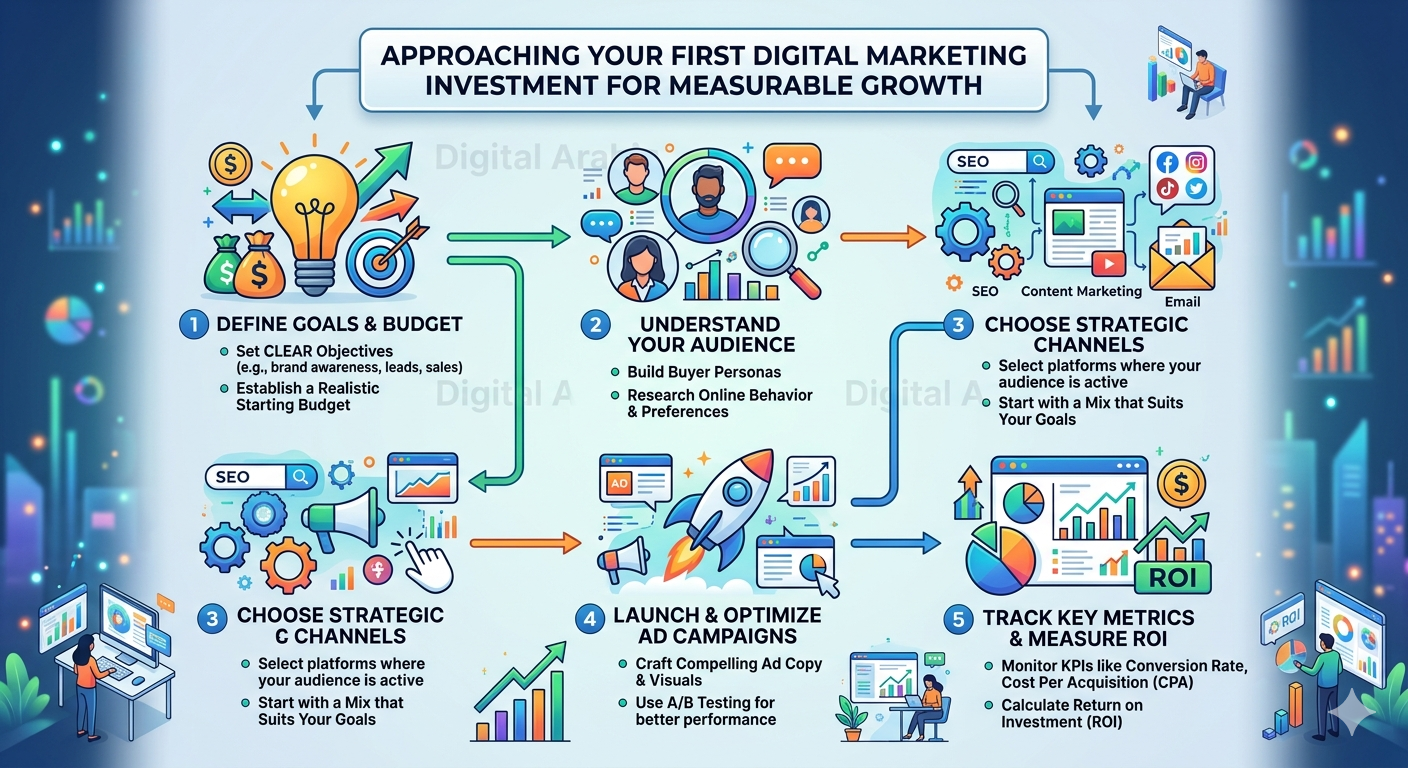
Digital Marketing is the major platform for connecting your product or services with right customers online using digital channels like social media, search engine, email and SMS marketing. The main aim of using digital marketing is to get traffic, leads and brand awareness from the target audience and the right keyword.
In this modern world, most people spend a lot of their time on the internet and search the nearby stores for direct visits and shopping, so digital marketing is at its peak in today’s modern world. Businesses have recognized this shift and are increasingly focusing their efforts on online platforms to reach their target audiences.
You can become a successful person in your business by hiring our Digital marketing agency in Dubai that provides affordable digital marketing services compared to competitors' prices whether it's a small to large business.
In this comprehensive blog we cover what are the types of digital marketing and how it works. Let’s dive in!
8 Different Types of Digital Marketing
1. Search Engine Optimization (SEO)
Search Engine Optimization (SEO) is the process of ranking the website top on search engine result page (SERP) using the relevant keywords to increase the website traffic and sales organically for long-term. This works on various strategies like keyword research, website content quality, on page and off page activities.
Google works on specific ranking algorithms to rank the websites on Search Engine Result page (SERP).
Advantages:
- Cost-effective in the long run compared to paid advertising.
- Improve the user experience and visibility.
- Increase the website traffic organically (free).
- Majorly increase the website traffic and conversion.
2. Content Marketing
Content Marketing is one of the effective methods for reaching out customers with attractive, valuable and relevant content. It aims to increase profitable customers by providing information about their specific needs and interests. It includes blog posts, videos, infographics, and social media updates.
Uses:
- Supporting SEO efforts through the creation of relevant content.
- Building brand authority and trust.
- Educating the audience about the product or service.
Advantages:
- Provides content for social media and other digital marketing channels.
- Enhances brand reputation and loyalty.
- Generates more leads and conversions.
3. Social Media Marketing
Social Media Marketing (SMM) means promoting your products or services using social media platforms like Facebook, Instagram, LinkedIn, Twitter, and others. It aims to increase brand awareness, and sales, and sharing the post, offers updates regularly with your followers.
Today’s age everyone uses social media in their daily routine life so social media marketing is one of the easiest ways to find who are interested or need your products or services and quickly get a sale and build your brand popularity.
Get a reliable SEM agency in Dubai with Digital Arabia, Offering client based satisfaction services over the Middle East region. We help for your business growth and increase sales and traffic through paid advertising.
Uses:
- Building brand awareness and community engagement.
- Driving traffic to the website or landing pages.
- Promoting new products, services, or events.
Advantages:
- Direct interaction with customers and real-time feedback.
- Highly targeted advertising capabilities.
- Viral potential through sharing and recommendations.
4. Pay-Per-Click (PPC) Advertising
PPC is a model of internet marketing where advertisers pay a fee each time one of their ads is clicked. Essentially, it's a way of buying visits to your site, rather than attempting to earn those visits organically.
Uses:
- Quickly driving traffic to a website.
- Targeting specific demographics and geographic areas.
- Promoting time-sensitive offers or events.
Advantages:
- Immediate results with a measurable ROI.
- Highly targeted campaigns.
- Flexible budget management and control.
5. Affiliate Marketing
Affiliate marketing is a performance-based marketing strategy where a business rewards affiliates for each customer brought by the affiliate's own marketing efforts. This can be through a variety of methods like blogging, social media, or email marketing.
Uses:
- Expanding reach without directly investing in new marketing efforts.
- Leveraging the audience and influence of affiliates.
- Tracking performance through clear metrics and KPIs.
Advantages:
- Low risk and cost-effective since payment is based on performance.
- Access to new markets and customer segments.
- Enhances brand credibility through trusted affiliates.
6. Email Marketing
Email marketing involves sending targeted emails to a group of subscribers. This can include newsletters, promotional offers, announcements, and personalized messages aimed at nurturing leads and building customer relationships.
Uses:
- Promoting products, services, or events.
- Nurturing leads through the sales funnel.
- Building and maintaining customer relationships.
Advantages:
- Direct and personalized communication.
- High ROI due to low costs and effective targeting.
- Measurable results through open rates, click-through rates, and conversions.
7. Influencer Marketing
Influencer marketing involves partnering with influencers—individuals who have a significant following and influence over a target audience. Influencers promote products or services through their platforms, often integrating the marketing message into their content.
Uses:
- Reaching niche markets and audiences.
- Building brand awareness and trust through credible endorsements.
- Driving sales through authentic recommendations.
Advantages:
- High engagement rates compared to traditional ads.
- Access to a loyal and engaged audience.
- Boosts brand visibility and credibility quickly.
8. Mobile Marketing
Mobile marketing is a multi-channel digital marketing strategy aimed at reaching a target audience on their smartphones, tablets, or other mobile devices through websites, email, SMS, social media, and mobile applications.
Uses:
- Delivering timely and location-based offers.
- Enhancing user experience through mobile-optimized content.
- Engaging users via mobile apps and push notifications.
Advantages:
- High user engagement as most people use mobile devices extensively.
- Personalized marketing through geo-targeting and user data.
- Immediate and direct communication with the audience.
Conclusion
Hope this blog gives you the clear information about digital marketing, what the types are and how each type of digital marketing works on your business. Each type of digital marketing gives you unique advantages in their specific way like Search Engine Optimization (SEO) gives the long term results for your business, Pay Per Click (PPC) gives you the instant sales and traffic for your website, Social Media Marketing (SMM) build the customers trusts, Email marketing share the recent updates, offer directly to the customers, and more.
So If you’re running a startup company or enterprise company and want to promote your products or services to your customers, Then Digital Marketing is one of the smart paths to become successful in your business.